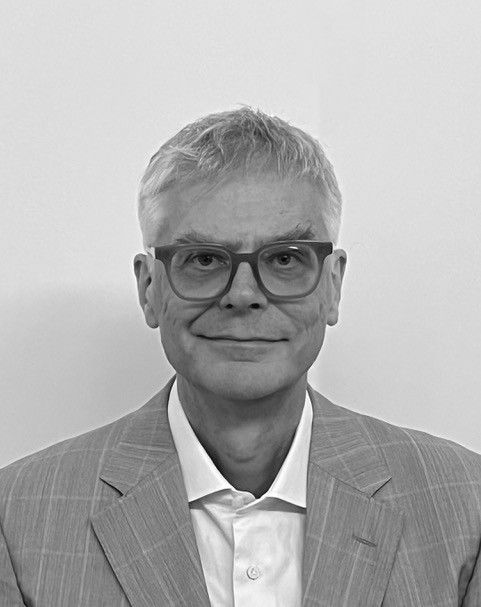
Ben Jastram & Joachim Weinhold


Ben Jastram

Deutschland

Education & Career

Since 2022 operative manager of the Central Facility 3D Technologies of the TU Berlin

Since 2010 permanent employment at the 3D-Lab

Since 2009 Scientific Assistant at University of Technology Berlin, Faculty II for Mathematics

and Natural Sciences, Institute of Mathematics, 3D-Lab

2001 - 2009 Diploma of Engineering Grade: Excellent at the University of Arts Berlin, Institute of Architecture

1998 - 2001 Graduation with certificate of apprenticeship as stonemason, winner of the state championship Schleswig Holstein

1997 - 1998 Completion of the Civil Service

1985 - 1997 School education, general qualification for university entrance with Abitur


Key Interests

Additive Manufacturing

CNC-Milling

Mechatronics

Material Sciences

CAD/CAM

Joachim Weinhold

Deutschland

Education & Career

since 2017 permanent employment at the 3D-Lab and in follow the Central Facility 3D Technologies

since 2009 Scientific Assistant at the 3D-Lab at the Institute for Mathematics of the Technische Universität Berlin

since 2000 Lecturer and/or Artistic Assistant in specific the University of the Arts Berlin with the major focus on additive manufacturing in relation to its use in design and the arts

1999 Postdiploma Graduation as Meisterschüler at the HBK Braunschweig, Germany

1998 Diploma of Fine Arts at the HBK, Braunschweig University of Art, Germany

1987 Graduation with certificate of apprenticeship as carpenter

1984 General higher education entrance qualification with Abitur


Key Interests

Micro Computed Tomography

Additive Manufacturing

Cooperative projects with museums and other scientific and cultural institutions

  • Abstract

    What will they do with it?


    Since they were invented in the 1980s, “tool-free” manufacturing processes have evolved from experimental technologies into established methods of industrial production. A wide range of fundamentally different technologies and numerous variants are now available on the market. Modifications to these technologies open up new areas of application or improve existing ones.


    The range of applications for 3D printing continues to expand as the accuracy of the processes and data sources improves. The actual production process is only one part of the process chain required for manufacturing; this chain generally does not end when a component is removed from the machine.


    In the first part of our presentation, we will draw on practical experience from recent projects to illustrate the opportunities, challenges, and potential of 3D printing. These projects range from astronomy to zoology and involved the 3D Laboratory at the Institute of Mathematics at TU Berlin, now known as the Centre for 3D Technologies.


    In the second part, we will discuss technical developments we are exploring based on our experience in recent years. Although the range of materials that can be processed continues to grow, both the technologies and the materials remain subject to considerable limitations: Materials of interest for additive manufacturing must be modified to make them compatible with the respective technologies, and the technologies must be adapted to the materials.


    As part of an internal funding programme at TU Berlin, the Centre for 3D Technologies is developing an experimental 3D printer designed to process materials suitable for medical technology applications.


Download Abstract