
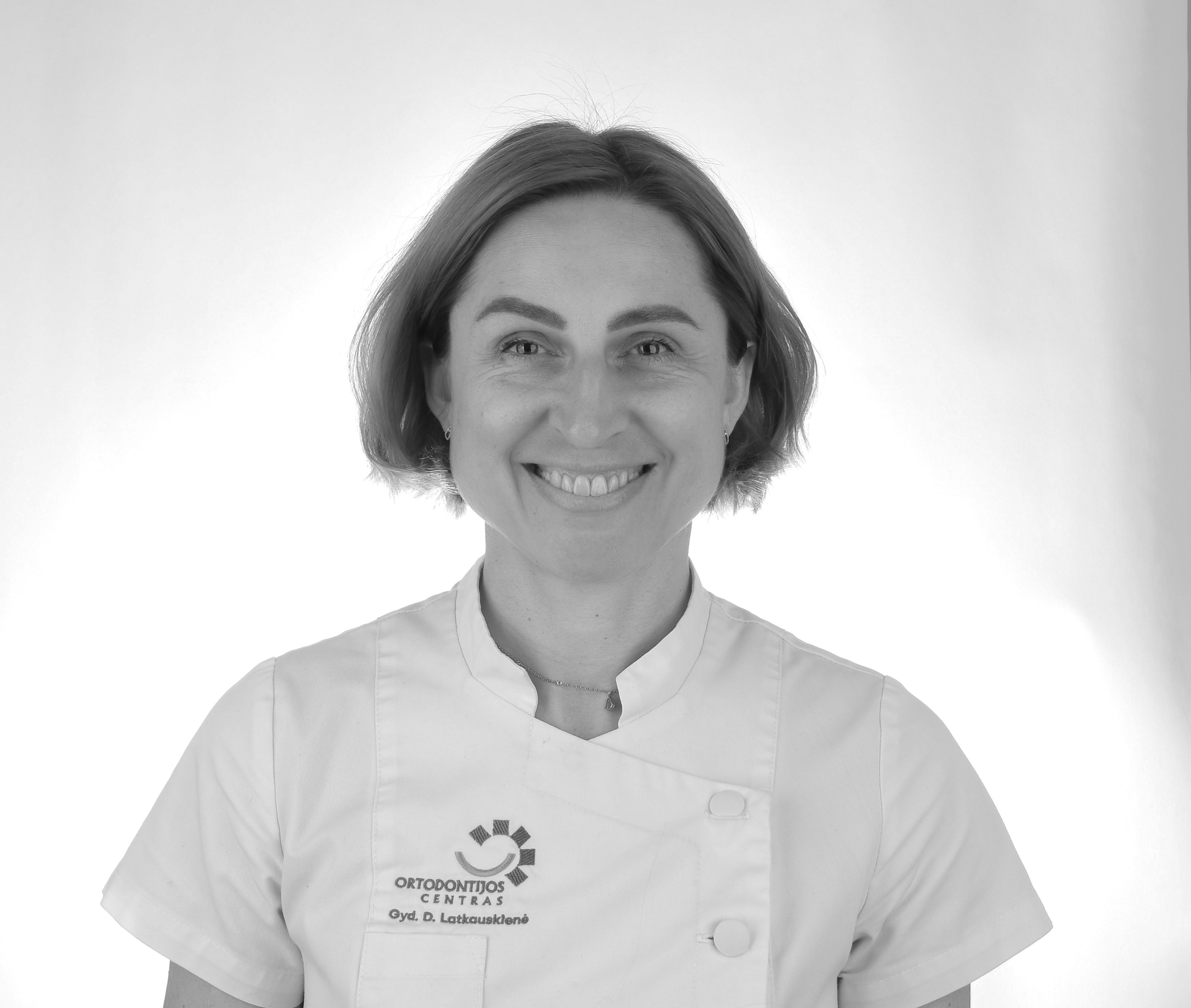
Dr. Dalia Latkauskiené

Lithuania

Dalia Latkauskienė received her dental degree from Kaunas University of Medicine and has been in full-time private practice since 2002. She defended her PhD thesis, "Herbst-effects on jaws and dental arches in growing Class II patients," in 2013. 


Dr. Latkauskienė has presented lectures, seminars, and continuing education courses worldwide on topics including the crowned Herbst appliance, mixed dentition treatment, aligner treatment, adult orthodontics, multidisciplinary treatment, and combined orthodontic-orthognathic treatment (in collaboration with maxillofacial surgeon S. Grybauskas, DDS, MD, PhD). 


She currently serves as the President of the Lithuanian Orthodontic Society and as the Treasurer of the European Aligner Society. 


  • Abstract

    Vertical dimension- exposure of upper incisors 


    Maxillary hyperplasia is characterized by excessive sagittal and/or vertical growth of the maxilla, or sometimes both jaws, often leading to Class II malocclusion, increased overjet, lip incompetence, gummy smile, and impaired facial balance. Treatment depends on the patient’s age, growth potential, and severity of the skeletal discrepancy. While orthognathic surgery is the definitive option for severe deformities in non-growing patients, growth modification and orthodontic camouflage may be effective in selected cases. 


    In growing patients, orthopedic approaches using skeletal anchorage and vertical control aim to harmonize maxillary and mandibular development. Proper timing during peak growth is essential to maximize skeletal effects and limit dentoalveolar compensation. When growth is limited or discrepancies are mild to moderate, camouflage through controlled dentoalveolar compensation—such as incisor retraction, anchorage reinforcement, and vertical control—can improve occlusal function and facial aesthetics without surgery. 


    Accurate diagnosis, including cephalometric, growth, and soft tissue assessment, is crucial to distinguish true skeletal excess from dentoalveolar protrusion and to select the most appropriate treatment approach for stable and esthetic outcomes. 


Download Abstract